


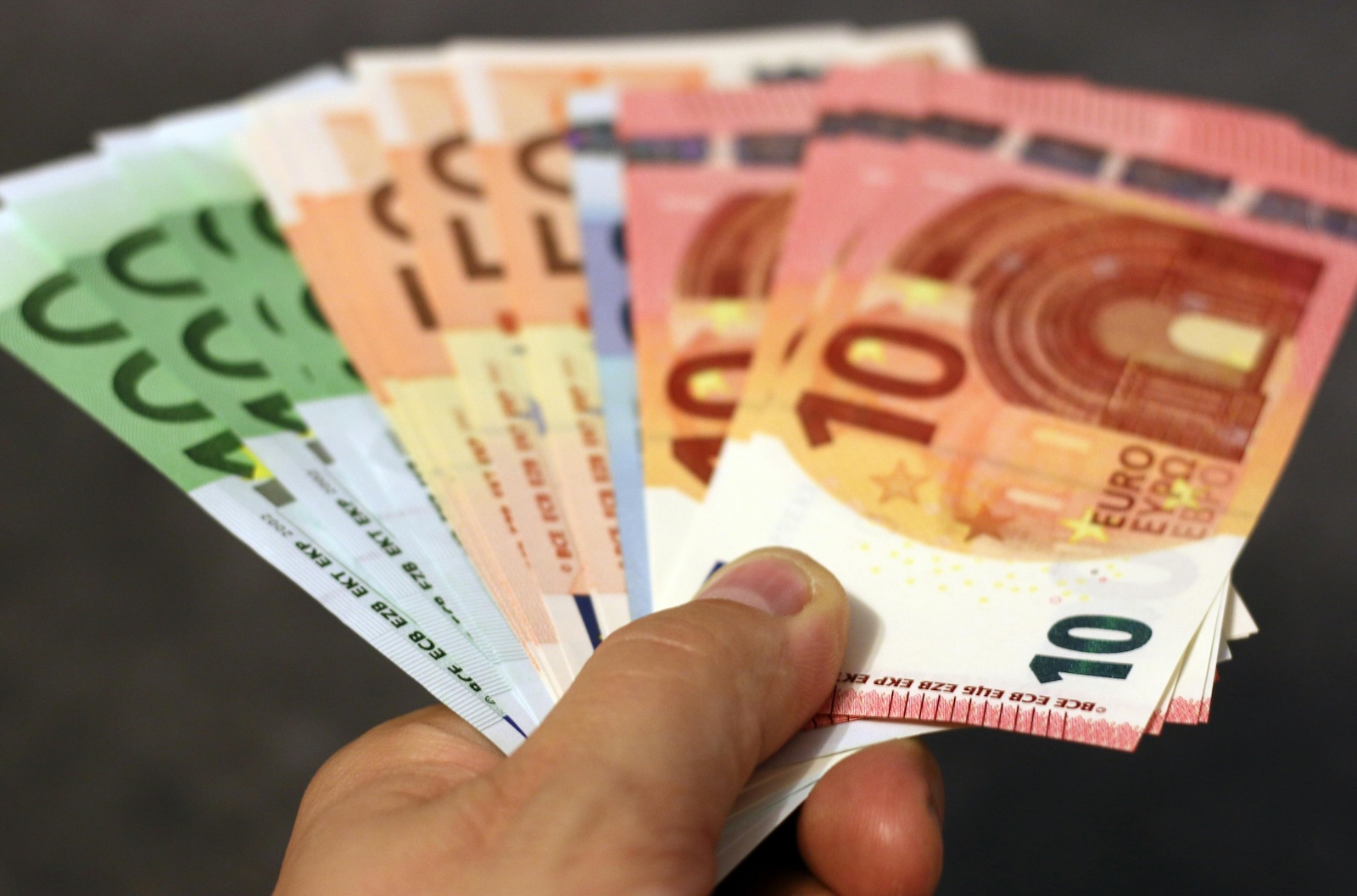
The Ultimate Guide to Traveling with Cash was written to teach you how to safely and effectively manage your cash when traveling abroad.
I have never lost my cash or had it stolen while traveling. Nor have I ever found myself entirely without access to cash.
So after many years of traveling internationally, here are the most import things I’ve learned about traveling with cash.
Only Bring New Bills
You should only bring new bills for your emergency cash, and any cash you plan on exchanging for local currency.
New means the bills are in good shape and are the most recent version available.
Many foreign currency exchange businesses will only accept the newest version of the currency. So there is a very good chance an older style $100 bill will not be accepted.
The bills should also be crisp and clean. Bills that are damaged or heavily used might be turned away.
If you find yourself in a pinch and need to exchange an old bill, try to exchange newer bills at the same time. If you put the old bill at the bottom of the stack, the person counting it is less likely to notice.
Have Emergency Cash
You should always have emergency cash when visiting another country.
Emergency cash is exactly what it sounds like: cash you can use in the event of an emergency to buy food, rent a hotel, buy a plane ticket, or even pay a bribe if you find yourself in a country where this is customary.
So the only time you should be converting this money at a currency exchange (or spending it) is in the event of an actual emergency while traveling.
If everything goes according to plan, you will return home with 100% of this cash.
So how much emergency cash should you bring? I recommend bringing a minimum of $500 U.S. Dollars. (Or the equivalent in your home currency.) $1,000 – $1,500 U.S. Dollars would be even better.
Also, be sure to split-up your emergency cash and store it in multiple places as discussed below.
Don’t Keep All Your Cash in One Place
You should never keep all of your cash in one place when traveling.
Instead, you should split up your emergency cash and your spending cash and store it in multiple places. This also means it should be stored in different pieces of luggage.
The goal is to prevent any single point-of-failure where you risk losing all of your cash. For example, if you keep all of your emergency cash in your backpack, then you risk losing all of it if your backpack gets lost or stolen.
And this brings us to another important consideration when traveling with cash: where to store it.
You should have a mixture of spending and emergency cash with you at all times. The remainder should be split-up and hidden in your luggage or other places back at your hotel.
Don’t Put Cash In Checked Bags
Make sure not to put cash in any bags that will be checked with the airline at the airport. The same goes if the bag is going to be out of your possession for any reason.
Also, I don’t recommend storing cash in your carry-on bag. If you end up on a flight with limited overhead storage space, you will be forced to leave your bag with the airline staff.
So the best thing to do is to split up your cash and keep it in your personal item, wallet, jacket, and anything else you might be traveling with. Just don’t keep it all in one place.
Remember: the airline should always let you bring your personal item onboard even if they don’t have room for your carry-on bag in the cabin.
Lastly, be sure not to store cash in bags that will be left with hotel staff.
Don’t Bring Too Much Cash
There is no reason to bring more cash than you need. Doing so will only cause stress and create a potential liability.
You should bring emergency cash, and enough cash for your journey while traveling to your destination.
After you arrive at your destination, you can use local ATMs to withdraw the cash you need for spending.
This is an extremely effective way to travel with cash without carrying too much at once.
Also, be sure to check out the article on How to Get the Best Foreign Exchange Rate at Foreign ATMs.
Have Hotels Break Your Large Bills
It is not uncommon for foreign ATMs to dispense large denomination bills when you withdraw cash.
Because of this, you end up with larger bills than you can use in many cases.
(Most street food vendors and taxi drivers can’t – or won’t – make change for large bills.)
Fortunately, most hotels will exchange large bills of the local currency for smaller bills as a free courtesy to guests who are staying at the hotel.
I have done this many times when traveling. Just visit the reception desk in the lobby where you check-in and ask who can help you with this.
However, DO NOT use any “cash-withdraw” or currency exchange services the hotel may offer you. Many hotels make money by offering this as a convenience, but you get a terrible exchange rate.
Don’t Withdraw All Your Cash At Once
This one should be obvious…but don’t withdraw all of your cash in local currency at once.
Get enough for a few days; then get more after you see how long your cash lasts. Yes there are small foreign ATM fees, but if you read this exchange rate article you will learn how to minimize these.
The only time you should withdraw more than a weeks worth of cash is if you are visiting an area outside of major cities.
For example, if you are traveling in rural areas of Thailand or the Philippines, you should bring enough cash for your entire time there. This is because ATMs are less common in remote areas. Power and internet outages can also disrupt ATM services.
You should also remember to bring small denomination bills when visiting remote areas. This is because many locals will not be able to make change for larger bills.
Don’t Use Cash Unless Needed
This item is related to the one above. The less cash you spend, the less often you will need to withdraw cash from foreign ATMs.
But more importantly, spending cash earns you 0 credit card points and $0 cash-back.
Collectively I have spent months living for FREE out of five-star luxury hotels because of credit card points. I have also taken many FREE international flights, including Business-Class flights, due to the points and miles game.
I will be publishing an article soon explaining how you can do the same. But in the meantime, my recommendation is to use cash only when needed.
Declare Amounts That Exceed Reporting Threshold
You should always be aware of the threshold amount for reporting cash when traveling through customs.
For example, many countries have a $10,000 USD reporting threshold. This means you are required to declare how much cash you are carrying if the amount exceeds $10,000 USD.
This should not apply to most readers since most people will not be traveling with this much cash.
But if you happen to find yourself in this situation, I highly recommend following the reporting laws of any country you are entering or exiting. Not doing so could result in your cash being seized and you facing criminal charges or prison.
That being said, the much smarter strategy would be to make sure the amount of cash you are traveling with does not exceed the reporting threshold in the first place.
Spend Your Cash On Tips For Maximum Value
I’ve saved the best tip on traveling with cash for last.
Getting the maximum value for your money should always be one of your goals. And one of the best ways to maximize the value of your cash is by spending it on tips.
On average, I spend 80-90% of my cash on tips when traveling. This is because developing a reputation as a good tipper will get you better service and deliver a very high ROI on every Dollar, Euro, Baht, or Peso you spend. If done correctly.
(Soon I’ll be posting an entire article on tipping when traveling that teaches you how get the VIP treatment by tipping like a professional. Read this article and thank me later.)
Next Steps
Your travels will go much better if you follow the strategies outlined above in The Ultimate Guide to Traveling with Cash.
Implementing these practices will also reduce your stress levels and make you more prepared than 99% of travelers.
Next, be sure to read the other important articles that are linked throughout this article.
And don’t miss the other Travel articles that are here to help you on your international dating journey!
